
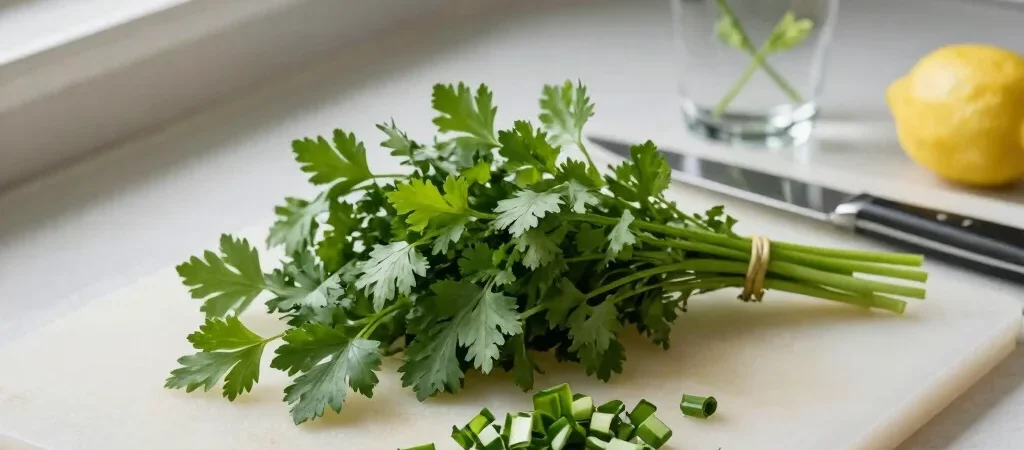
A bunch of parsley can wilt in the refrigerator while you keep reaching for the dried herbs in the cupboard. The small shift that helps is to treat the stems and leaves as two useful ingredients, each with its own moment in the cooking.
Separate the bunch by texture
Rinse the herbs, shake off the water, and pat them dry before chopping. Pick off the leaves, then gather the tender stems separately; parsley and cilantro stems are usually fine enough to chop, while thick, woody ends are better discarded.
The stems can go into a pan with onions, garlic, or other aromatics, where a few minutes of heat softens their texture. The leaves are more delicate, so they keep their color and fresh aroma when added near the end or scattered over the finished dish.
Put the stems to work
Finely chop parsley stems and cook them with diced onion before adding chickpeas or lentils. For a quick soup, add chopped cilantro stems to the pot with garlic and ginger, then finish the bowls with cilantro leaves and a squeeze of lime.
If you’re making a salad dressing, tender stems can be blended with olive oil, lemon juice, and a pinch of salt. Start with a small handful and taste as you go; adding more is easy, while too much can make a delicate dressing taste grassy.
Keep fresh herbs usable
If you won’t use the whole bunch that day, trim the ends and stand the herbs in a jar with a little water. Loosely cover the leaves and refrigerate, changing the water when it looks cloudy. Dry herbs tend to keep better this way than a wet bunch tucked into a sealed bag.
Chop extra leaves and stir them into softened butter, or freeze them in a small container for a future soup or sauce. They won’t have quite the same fresh texture after freezing, but they can still bring a welcome herbal note to something simmering on the stove.